
Section 1 — The Fork in the Road
Section 1 — The Fork in the Road
~2 min
Every few years, technology hands us a fork in the road, and we mostly pretend we didn't see it.
Right now there are two loud crowds arguing about which way to go.
On one side: the doomers. AI and biotech are so dangerous, they say, that the only safe move is to slow down — pause the labs, regulate hard, maybe stop altogether. Hit the brakes before we drive off the cliff.
On the other side: e/acc, the effective accelerationists. Their answer is the opposite — floor it. Technology is the engine of all progress, the market will sort out the risks, and anyone preaching caution is just scared of the future. Brakes are for cowards.
Both camps are completely sure they're right. Both are missing something.

In November 2023, Ethereum's Vitalik Buterin published an essay that quietly pointed at a third door. The argument was simple but slippery: acceleration is going to happen whether we like it or not — but the direction is still up for grabs.
Speed isn't the only dial on the dashboard. There's a steering wheel too.
He called it d/acc. The "acc" is acceleration — same as the e/acc folks. The "d" is where it gets interesting: defensive, decentralized, democratic (plus one more we'll get to in a minute). The whole philosophy fits in a single sentence:
Don't just build technology faster. Build the defensive stuff faster than the offensive stuff.
Instead of better bioweapons, better air filters and vaccines. Instead of better surveillance, better encryption. Instead of platforms that can deplatform you on a whim, tools nobody can switch off. Same gas pedal — very different destination.
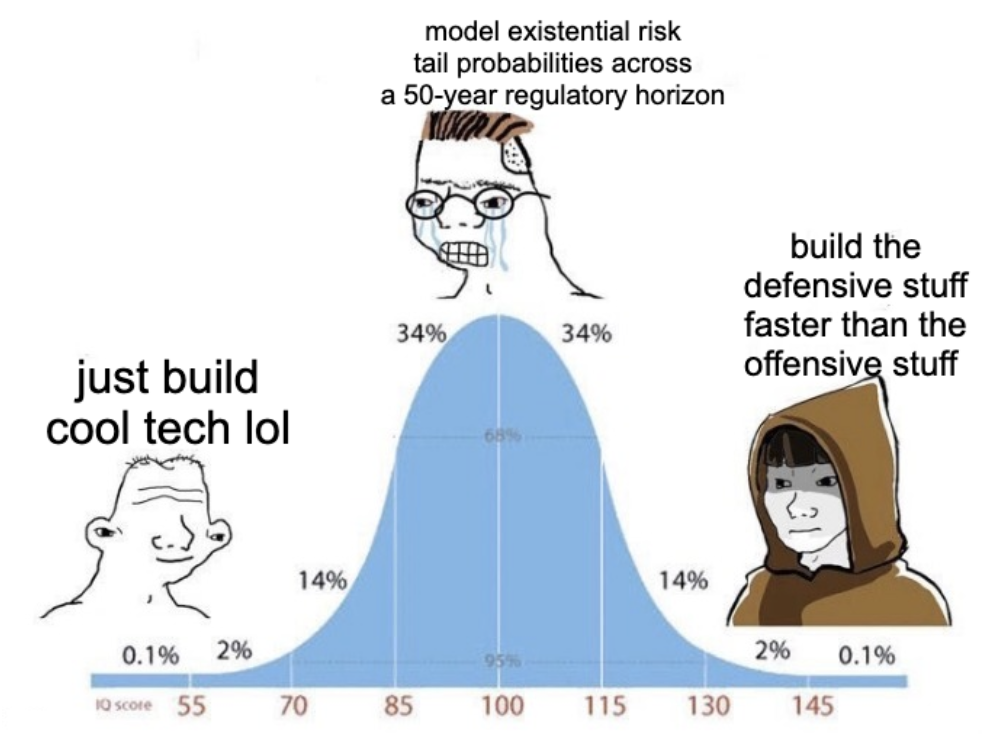
And here's the part that gets lost in the crypto noise: this was never just a crypto thing.
Strip away the jargon and d/acc is asking a question that the open-source movement, the EFF, and human-rights technologists have been chewing on for thirty years: does this technology hand power to the individual, or quietly take it away? The cypherpunks asked it about encryption in the '90s. Privacy advocates ask it about your phone today. d/acc just gives the question a name — and, more usefully, a map.
The rest of this course is that map. Let's read it.